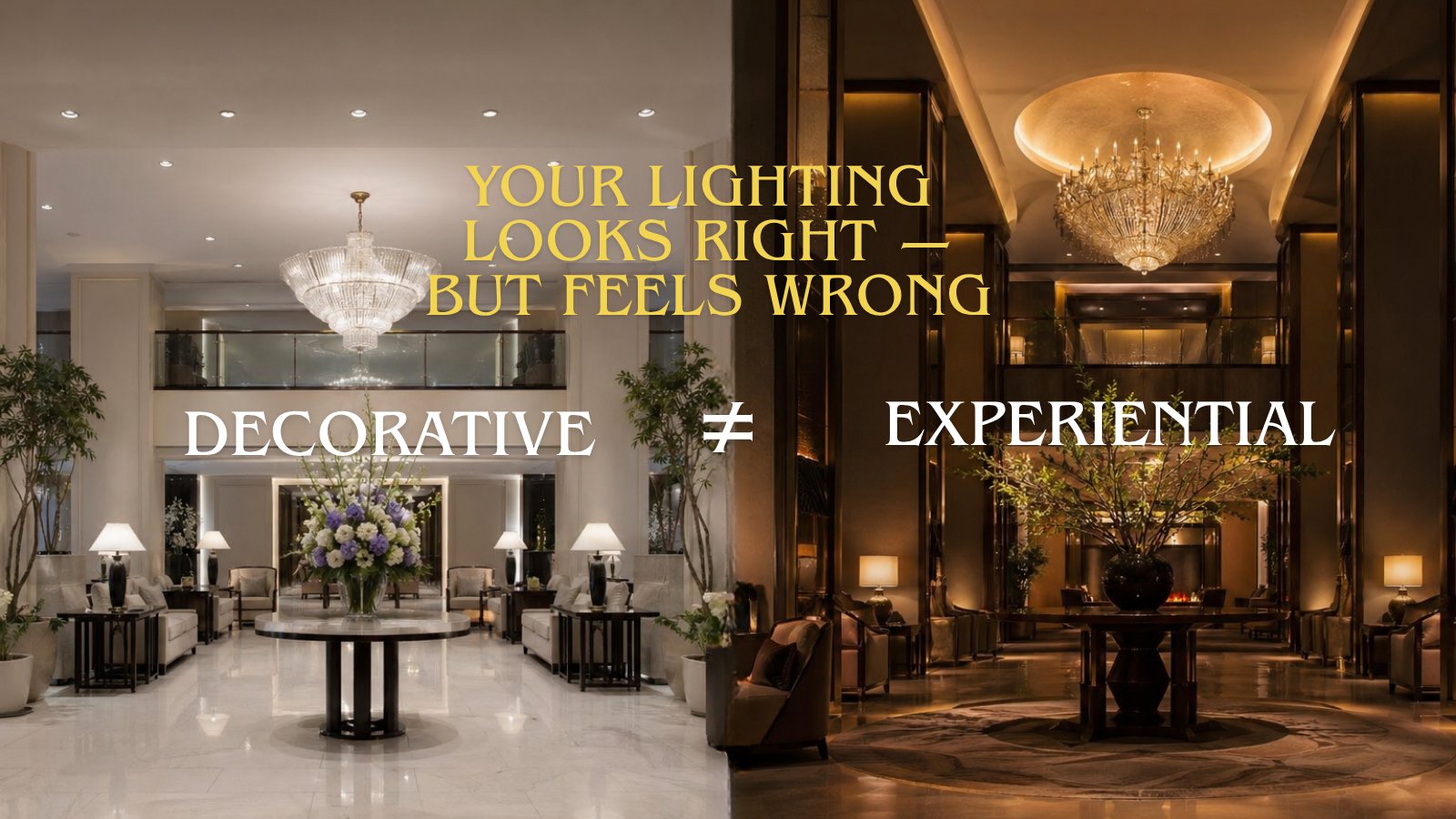
When guests walk into a hotel lobby, they don’t consciously analyze the lighting — but they feel it instantly.
Before they notice the marble flooring, the furniture, or even the reception desk, lighting has already shaped their emotional response. It defines whether a space feels warm or cold, intimate or grand, forgettable or iconic.
In luxury hospitality, first impressions are not just visual — they are emotional. And lighting is the medium that delivers that emotion.
Lighting as an Emotional Trigger
Most hotel developers invest heavily in materials: premium stone, custom furniture, branded finishes. But without the right lighting, even the most expensive materials can fall flat.
Lighting determines:
- How textures are perceived
- How colors are experienced
- How space is understood
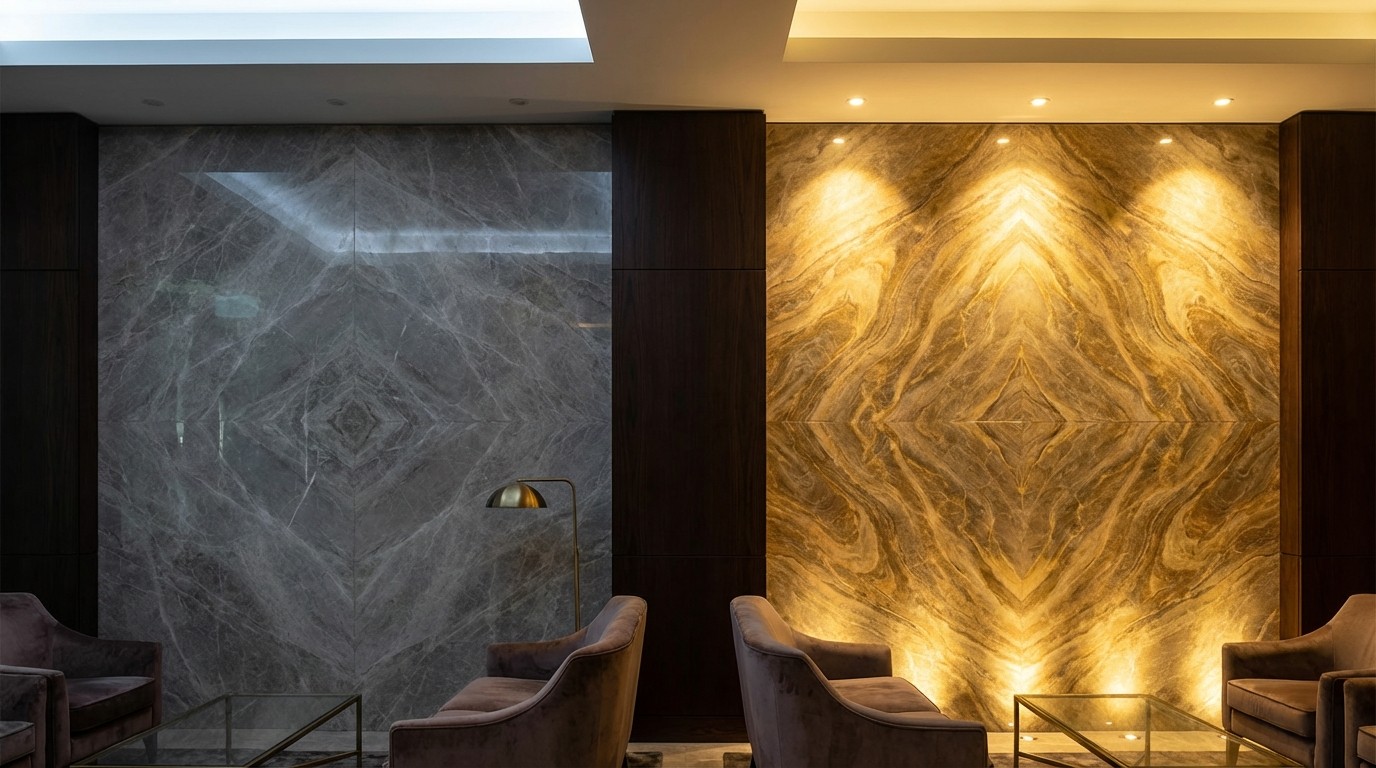
A poorly lit marble wall looks dull. A well-lit one becomes a statement.
This is why luxury lighting should never be treated as an afterthought. It is not decoration — it is a strategic design tool.
The Role of Statement Lighting
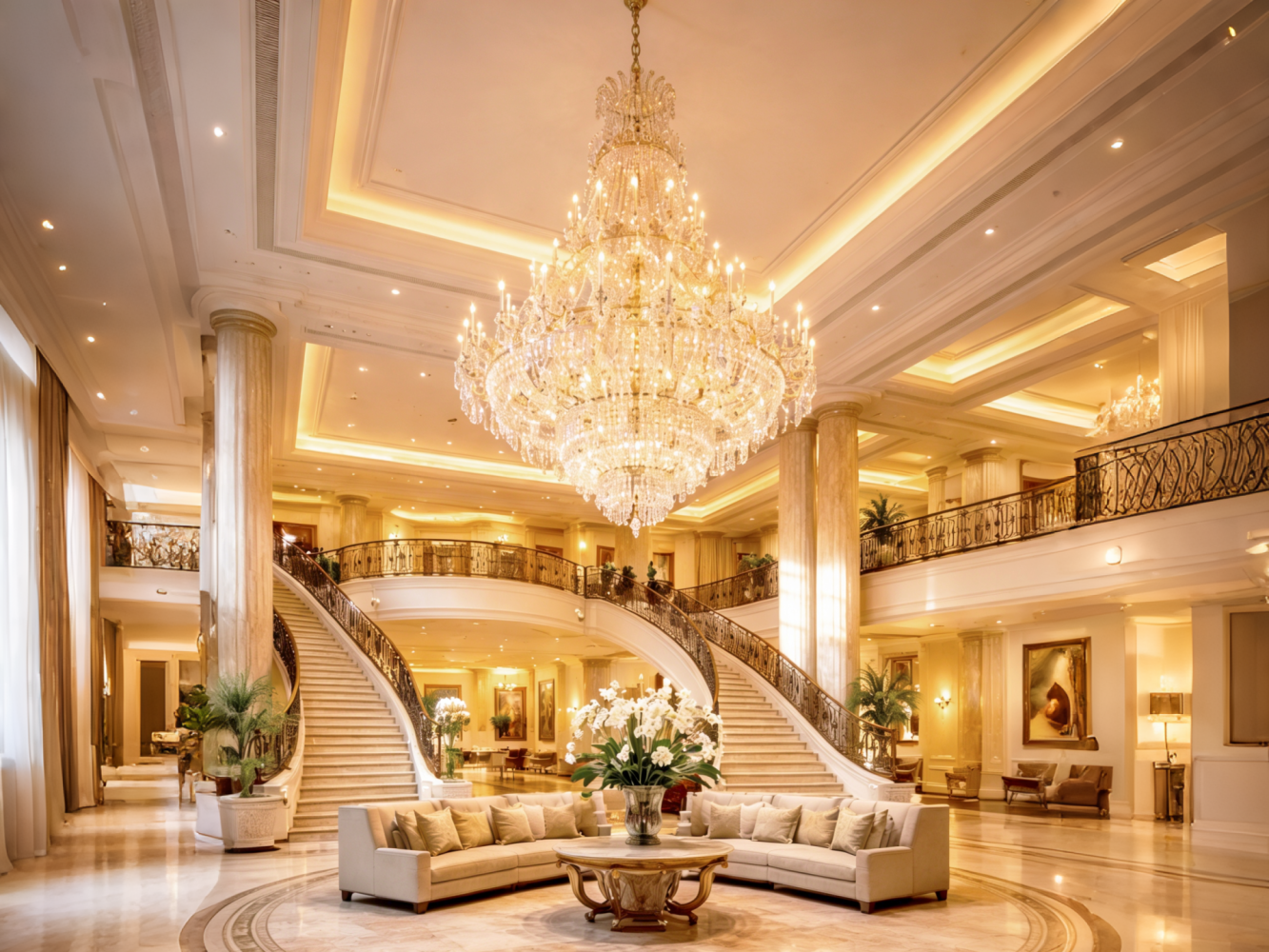
In many high-end hotels, the chandelier is more than a decorative object. It acts as a visual anchor — a centerpiece that defines the identity of the space.
Think about iconic hospitality spaces: what do guests remember?
More often than not, it's not the sofa or the flooring — it's the lighting feature above them.
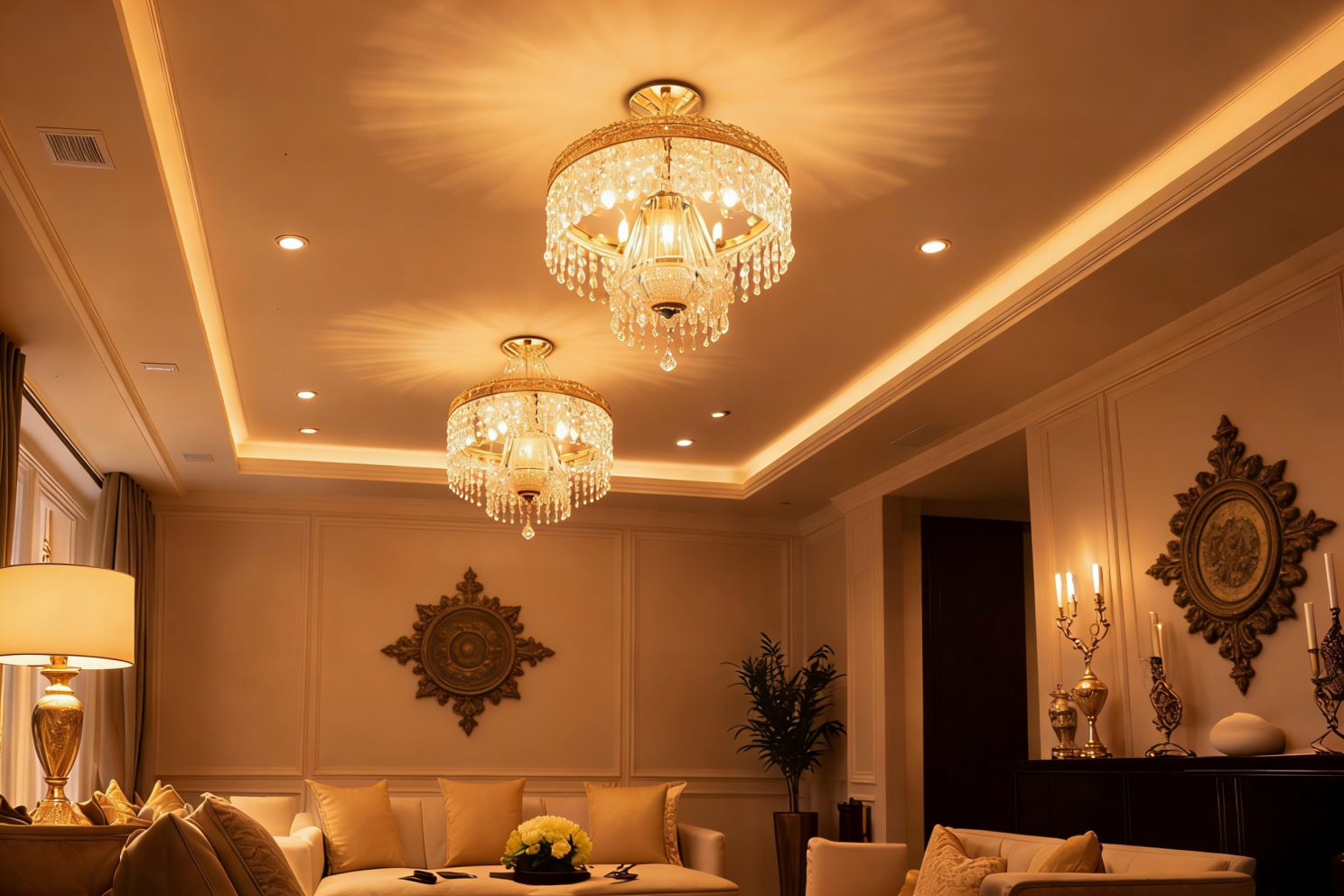
- Creates a focal point
- Reinforces brand identity
- Enhances perceived value
This is especially critical in competitive markets, where differentiation is everything.
Layered Lighting: The Key to Depth
Luxury lighting is rarely about a single fixture. It is about layers.
A well-designed hospitality space typically includes:
- Ambient lighting (overall illumination)
- Accent lighting (highlighting features)
- Decorative lighting (visual identity)
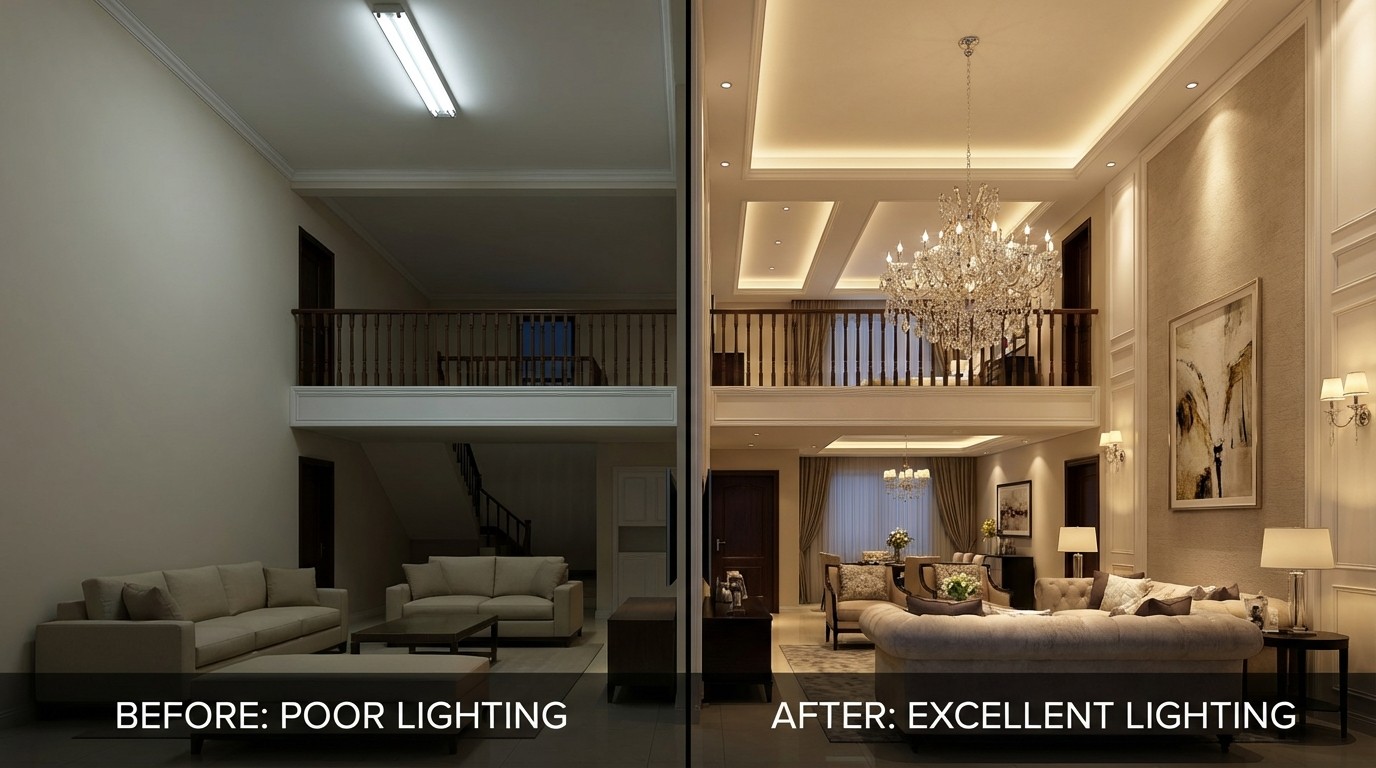
Without layering, spaces feel flat and one-dimensional.
With proper layering, lighting creates depth, rhythm, and contrast — all essential elements of a memorable environment.
From Design to Execution
One of the biggest gaps in hospitality projects is not design — it's execution.
Even with a strong concept, the final result often falls short due to:
- Poor coordination between lighting and FF&E
- Lack of customization
- Inconsistent installation quality
This is where experience matters.
A successful luxury lighting solution requires:
- Early-stage collaboration with designers
- Technical understanding of the space
- Precise execution on-site
Because in the end, guests don't see drawings — they experience reality.
Lighting as a Value Multiplier
For developers, lighting is not just a design decision — it is a business decision.
Well-executed lighting can:
- Increase perceived room value
- Enhance brand positioning
- Improve guest satisfaction and reviews
In other words, it directly impacts ROI.
And in luxury hospitality, perception is everything.
Conclusion
Luxury lighting is not about brightness — it is about experience.
It shapes first impressions, defines identity, and elevates space value.
The question is no longer whether lighting matters — but how intentionally it is used.
If you're working on a hospitality or high-end residential project, feel free to connect — we're always happy to exchange ideas on lighting and FF&E solutions.