
A space can be filled with premium materials, bespoke furniture, and high-end finishes — yet still feel underwhelming.
Why does this happen?
In many cases, the answer lies in one overlooked element: lighting.
Luxury is not defined by how much is spent, but by how seamlessly every element comes together. And more often than not, lighting is the missing link.
Below are three of the most common lighting mistakes that can instantly diminish the impact of a luxury space.
Mistake 1: Over-Reliance on Uniform Lighting
Many projects depend heavily on evenly distributed downlights.
While this approach ensures sufficient brightness, it often strips a space of depth and character.
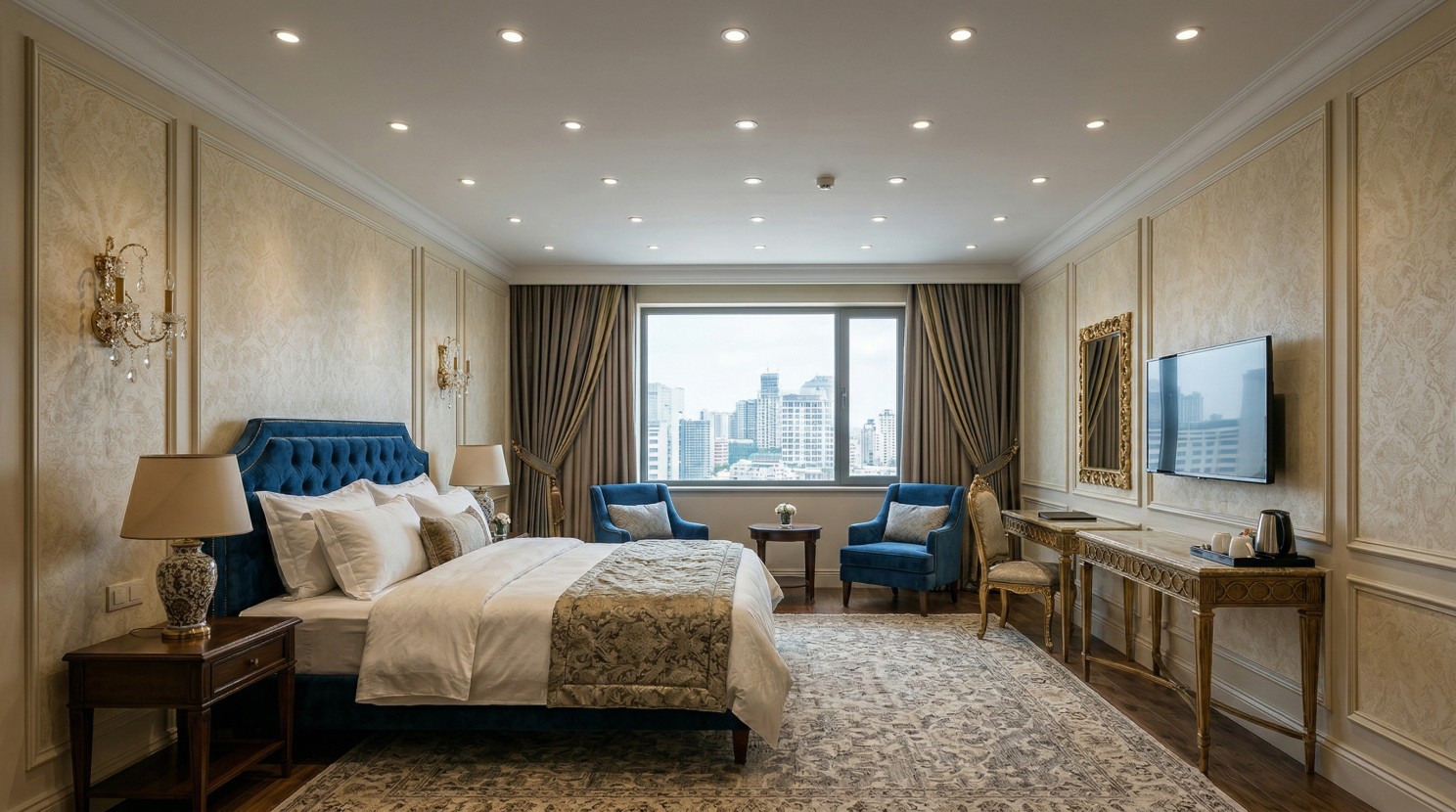
Uniform lighting tends to:
- Flatten textures
- Eliminate contrast
- Create a generic, one-dimensional environment
Luxury spaces, by contrast, thrive on variation and visual layering.
Rather than flooding a space with light, designers should focus on creating a clear hierarchy:
- Highlight focal points
- Introduce intentional shadows
- Allow areas of visual rest
Because contrast creates interest — and interest creates memorability.
Mistake 2: Treating Decorative Lighting as an Afterthought
In some projects, decorative lighting is approached as a finishing touch rather than a central design element.
This is a missed opportunity.
A well-designed chandelier or statement fixture can:
- Define the identity of a space
- Act as a visual anchor
- Strengthen brand storytelling
Without it, even the most refined interiors can feel incomplete.
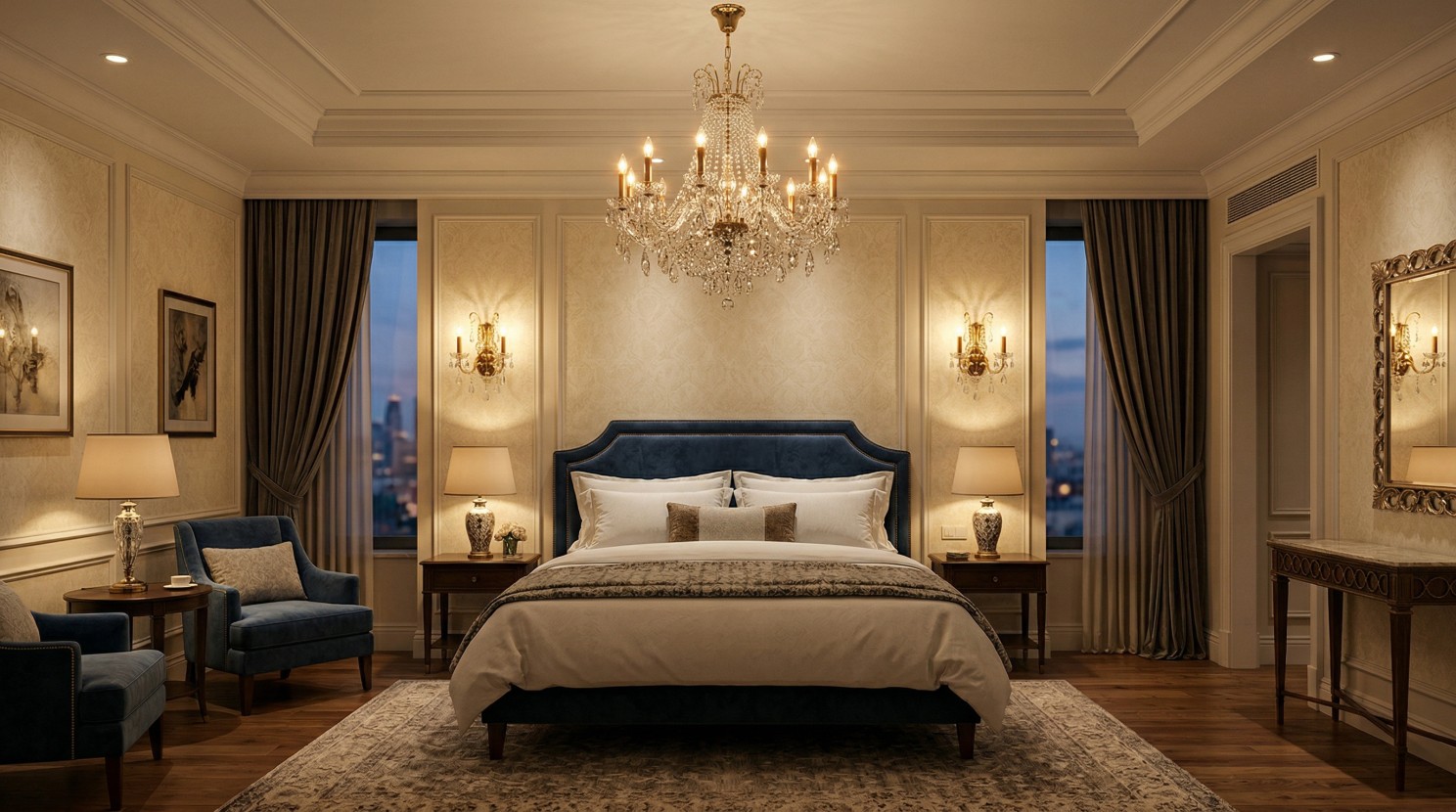
In luxury hospitality environments, lighting goes beyond function — it shapes emotion, atmosphere, and experience.
Mistake 3: Lack of Coordination with FF&E
Lighting should never be considered in isolation.
It must work in harmony with:
- Furniture
- Materials
- Spatial composition
When lighting is not aligned with FF&E, the result is often:
- Visual imbalance
- Awkward proportions
- A fragmented atmosphere
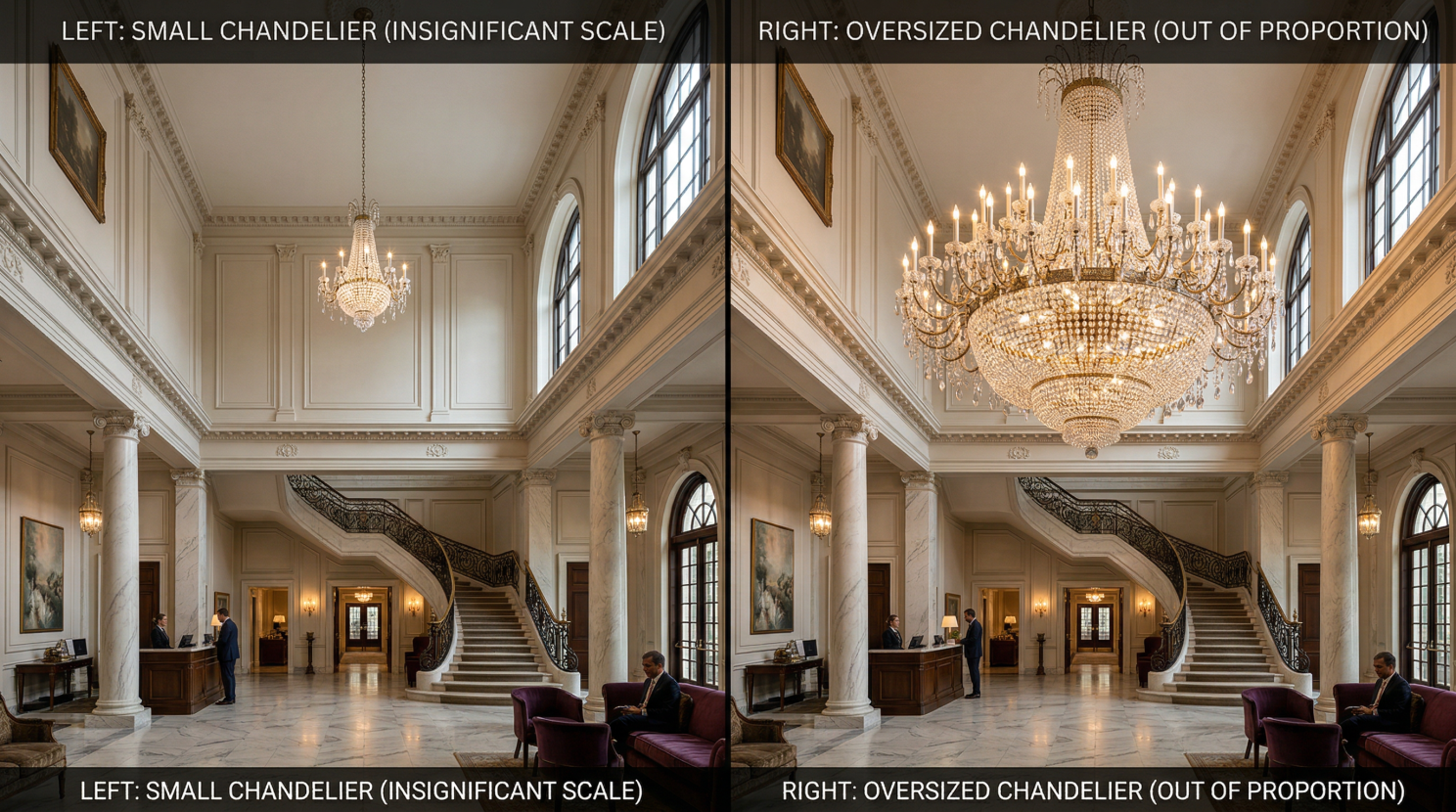
For example: A chandelier that is too small in a double-height lobby will feel insignificant. One that is oversized without proper spatial balance can feel overwhelming.
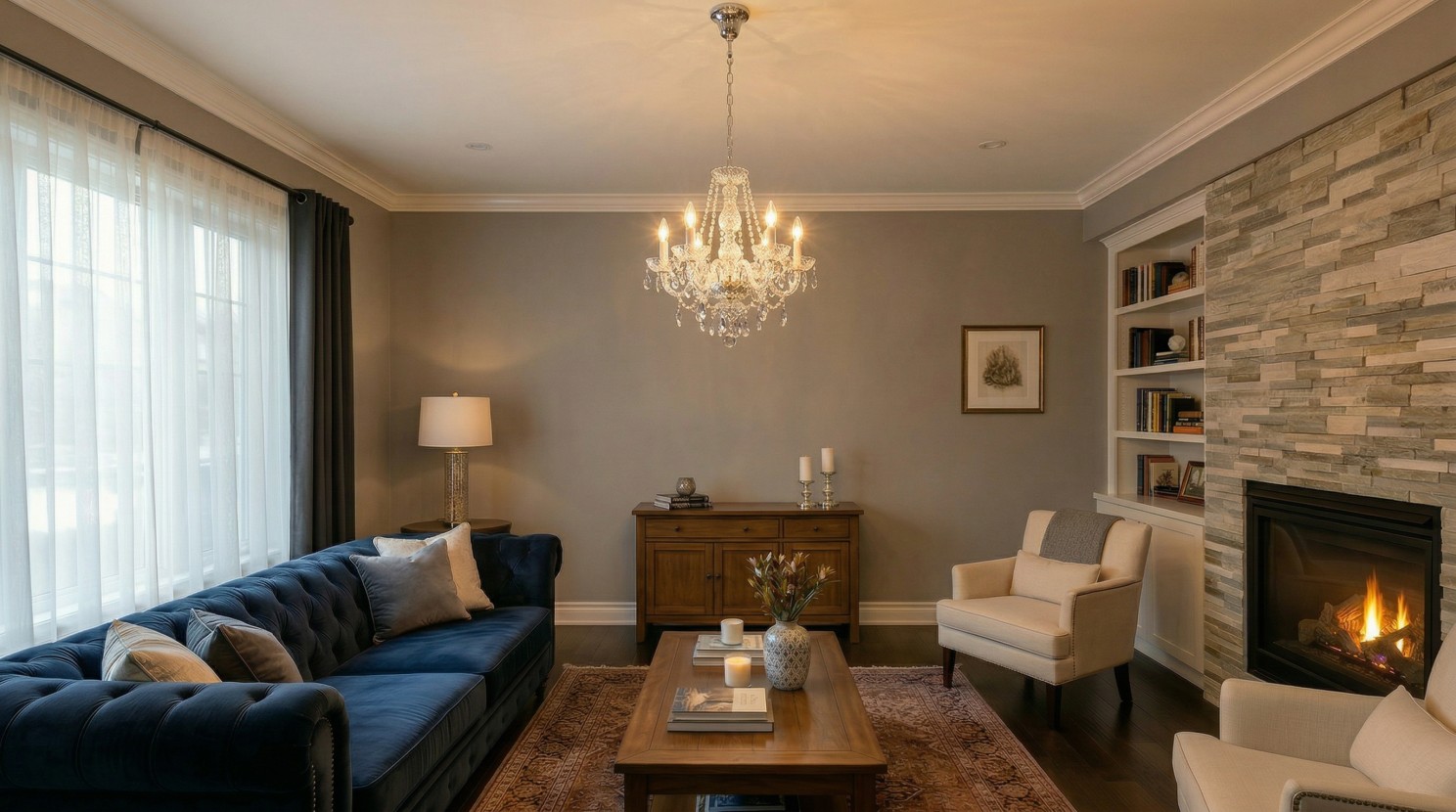
In home decoration cases, improperly proportioned lighting fixtures can also make your living room feel uncomfortable.
Scale, proportion, and integration are not details — they are fundamentals.
The Bigger Picture
These mistakes are not a matter of budget, but of approach.
Even high-budget projects can fall short when lighting is treated as secondary. Conversely, thoughtful lighting design can elevate even modest spaces into something memorable.
Conclusion
Luxury is the result of precision, intention, and cohesion.
Lighting sits at the intersection of all three.
Avoiding these common mistakes is not just about improving aesthetics — it is about safeguarding the integrity and value of the entire project.
If you are reviewing an ongoing project or planning a new development, lighting is one area worth prioritizing from the very beginning — not revisiting at the end.